
U.S. Federal Rescheduling: Momentum, but Not Finished
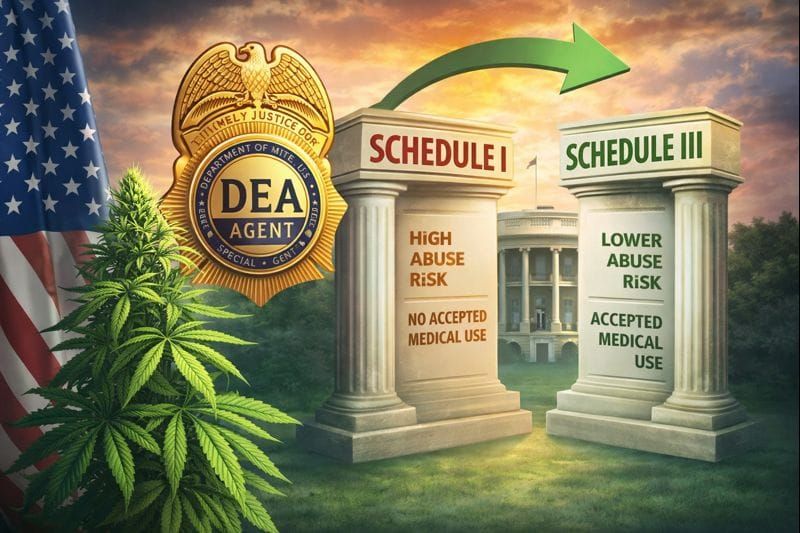
The United States is at a pivotal moment in cannabis policy. After decades of federal prohibition, the government is moving forward with a process that could reclassify cannabis from Schedule I—reserved for substances deemed to have no accepted medical use—to Schedule III, a category that acknowledges medical value while maintaining regulatory control.
While the shift would not amount to full legalization, it represents the most consequential federal cannabis action in generations.
What Rescheduling Actually Means
Schedule I status places cannabis alongside substances such as heroin, creating severe barriers to research, prescribing, and standard medical integration. Moving cannabis to Schedule III would formally recognize that it has accepted medical use and a lower potential for abuse compared to Schedule I substances.
This change would:
- Expand opportunities for federally approved cannabis research
- Reduce regulatory friction for medical studies
- Signal a major philosophical shift in federal drug policy
However, Schedule III would still keep cannabis regulated under the Controlled Substances Act, meaning state laws and federal oversight would continue to coexist—sometimes uncomfortably.
A Research-First Strategy
The administration has framed rescheduling as a science-driven correction, not a political shortcut. The White House has emphasized the need to align federal classification with decades of emerging medical evidence and real-world use by patients.
Rather than bypassing regulatory agencies, the President directed federal health authorities to:
- Review current scientific and medical data
- Accelerate research approvals
- Advance the administrative process through established channels
This approach reflects an acknowledgment long echoed by patients and clinicians: federal cannabis policy has lagged far behind reality.
The DEA’s Role—and Why Timing Matters
Any rescheduling decision ultimately runs through the Drug Enforcement Administration, which must evaluate recommendations from health agencies and complete a formal rulemaking process.
That process includes:
- Internal review
- Publication of proposed rules
- Public comment periods
- Potential legal challenges
In other words, momentum does not equal immediacy. The path forward is real, but it is neither automatic nor guaranteed to be quick.
Why This Matters for Patients and Wellness
From a wellness perspective, rescheduling could open doors to more rigorous clinical research on cannabis and its therapeutic potential. This includes better understanding dosing, interactions, and long-term outcomes—areas where data has historically been limited due to federal restrictions.
For patients, this could mean:
- Greater legitimacy for medical cannabis use
- Increased physician comfort discussing cannabis as part of care
- A stronger evidence base guiding treatment decisions
It is a step toward integrating cannabis into mainstream healthcare conversations rather than treating it as an outlier.
What Rescheduling Does Not Do
It’s important to be clear about limitations:
- It does not legalize recreational cannabis federally
- It does not override state laws
- It does not instantly normalize banking, interstate commerce, or employment protections
Rescheduling is a structural change—not a cure-all.
Momentum with Caution
The push to move cannabis to Schedule III reflects a growing consensus that the current federal framework is outdated. Yet it also highlights the complexity of reform in a system built on incremental change.
For now, the signal is clear: the federal government is no longer pretending cannabis has no medical value. But until the administrative process is complete, the story remains unfinished.
In cannabis policy, momentum matters—but process decides outcomes.