California’s Consolidation Era: Survival of the Strongest
For years, California’s cannabis industry sold a dream: scale fast, grow louder, and ride the wave of legalization toward limitless upside. Venture capital poured in. Brands multiplied. Delivery platforms promised frictionless access. The mood was euphoric—part counterculture, part tech boom.
That era is ending.
What’s taking its place is something quieter, more technical, and far less forgiving: consolidation.
When Big Names Get Smaller
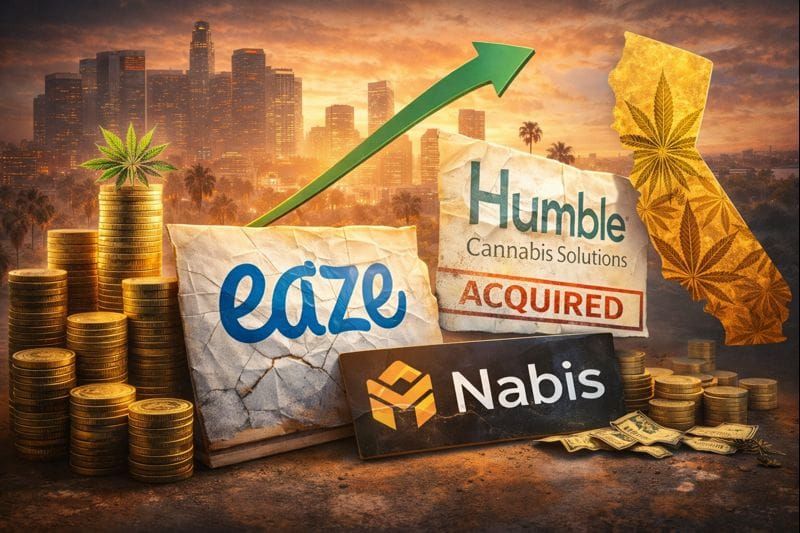
Nothing illustrates the shift more clearly than the recent fate of Eaze. Once one of the most recognizable names in cannabis delivery—and previously valued in the hundreds of millions—the company was acquired at a sharply reduced valuation.
It was a jarring moment for an industry long accustomed to growth stories. But it wasn’t an anomaly. It was a signal.
Even well-known brands, it turns out, are not immune to the structural pressures weighing on California’s market:
high taxes, relentless competition from illicit sellers, thin margins, and the sheer cost of compliance in the country’s most complex regulatory environment.
In California cannabis, scale alone is no longer enough.
The Invisible Squeeze
Behind the headlines is a more sobering reality. Legal operators are competing against an illegal market that still commands significant consumer loyalty—often because it’s cheaper, faster, and unburdened by regulation. At the same time, licensed businesses face some of the highest tax burdens in the nation, along with local fees, testing requirements, and logistics costs that compound at every step.
Margins collapse quietly before companies collapse publicly.
The result is a shakeout that feels less like a crash and more like attrition.
Infrastructure Is the New Power Play
While consumer-facing brands struggle, a different class of companies is quietly expanding.
Distributors, logistics platforms, and infrastructure providers—the plumbing of the cannabis economy—are buying assets, absorbing competitors, and building systems designed for endurance rather than hype.
A recent example is Nabis, which acquired select assets of Humble Cannabis Solutions. The move wasn’t about flash; it was about control—strengthening distribution capacity, technology, and operational reach for brands and retailers navigating a difficult market.
This is where the industry is consolidating now: not at the storefront, but behind it.
From Gold Rush to Governance
California has entered what insiders increasingly describe as the systems era.
The early years rewarded speed and visibility. Today, survival depends on efficiency, compliance, data, and infrastructure. Companies that can move product reliably, manage risk, and support retailers at scale are gaining leverage—even as others quietly exit the market.
It’s a familiar arc. The same pattern has played out in alcohol, tech, and retail: exuberance gives way to discipline; fragmentation gives way to consolidation.
What Comes Next
For entrepreneurs, the message is blunt: the window for easy entry has closed. For investors, returns will favor patience and operational strength over branding alone. And for regulators, the stakes are rising—because consolidation, while stabilizing, can also narrow opportunity if not managed carefully.
California remains the world’s largest legal cannabis market. But it is no longer a playground.
It is an ecosystem being rebuilt—piece by piece—by those with the systems to last.
The gold rush is over.
This is survival of the strongest.